
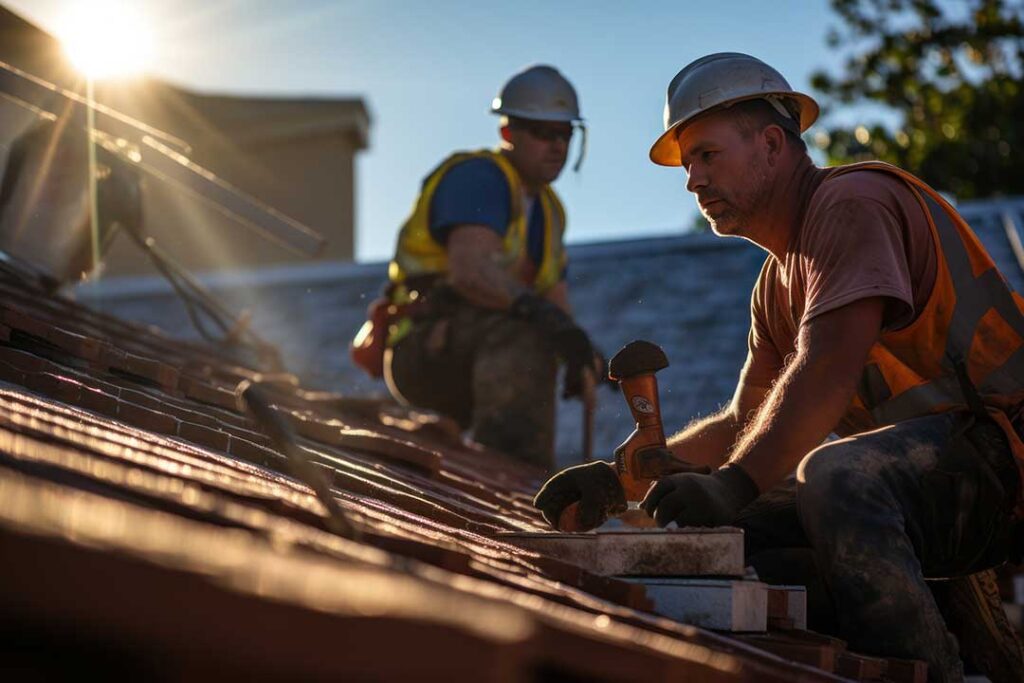
A roof tear-off is the removal of existing roofing materials down to the roof deck before a new roofing system is installed. For homeowners in Penfield, NY, the process usually involves several days of preparation, removal, inspection, weather planning, and cleanup—not just the visible work of taking shingles off.
Understanding the sequence can make the project easier to plan and can help identify problems that may not be visible from the ground.
What happens before the old roof is removed?
The first stage is preparation. Roofing materials, tools, protective coverings, and waste containers are arranged before removal begins. Areas around the house may be protected from falling debris, including siding, windows, landscaping, decks, air-conditioning equipment, and paved walkways.
Homeowners are often asked to move outdoor furniture, planters, grills, decorations, and vehicles away from the work area. Items attached to walls or mounted near the roof may also need temporary protection or removal.
Inside the home, vibration from tear-off work can cause lightweight objects to shift. It is sensible to secure fragile items, wall decorations, and anything stored in the attic. Dust or small particles may also enter through attic openings, recessed lights, or gaps around ceiling fixtures, especially in older homes.
Weather is another major consideration. In this region, roof work may be affected by rain, snow, freezing temperatures, ice, and strong wind. A tear-off exposes the roof deck, so removal is typically planned around a reliable period of dry weather.
How are roofing materials removed?
A tear-off generally begins at the roof edges and upper layers. Shingles, underlayment, flashing that is being replaced, and other roofing components are removed using hand tools and specialized equipment.
The work can be noisy. Scraping, hammering, walking on the roof, and moving materials create vibration that may be noticeable throughout the house. Tear-off also produces a large amount of debris in a short period of time.
Old shingles are usually moved from the roof to the ground in controlled sections. Protective systems may be placed around the building to help guide debris and reduce the chance of damage to surrounding property.
Not every roof is removed in exactly the same way. A simple one-layer asphalt shingle roof may be relatively straightforward, while a roof with multiple shingle layers, steep slopes, low-slope additions, skylights, chimneys, or complex valleys can require more time and care.
What is found after the shingles are gone?
The roof deck is the structural surface beneath the underlayment and shingles. Once the old roofing is removed, its condition can be inspected directly.
Common issues include:
- Water staining or darkened wood
- Soft, spongy, or deteriorated decking
- Cracked or split panels
- Gaps around roof penetrations
- Improperly installed previous repairs
- Weak areas near eaves, valleys, chimneys, or roof edges
- Damage caused by long-term moisture or ice-related water backup
Some homeowners are surprised when a roof replacement takes longer than expected because decking damage cannot always be seen before tear-off. A small ceiling stain does not always show the full extent of the problem, and some damaged areas may be hidden beneath sound-looking shingles.
If damaged decking is discovered, those sections may need to be replaced before new roofing materials are installed. Covering deteriorated wood with new shingles does not correct the underlying structural or moisture problem.
Why do flashing and ventilation matter during a tear-off?
A tear-off creates an opportunity to inspect roof details that are difficult to evaluate from the ground. Flashing directs water away from vulnerable areas such as chimneys, walls, valleys, skylights, and roof-to-wall transitions.
Older flashing may be bent, corroded, improperly fastened, or sealed with materials that have failed. In some cases, flashing can be reused if it remains sound and compatible with the new roofing system. In other cases, replacement is more reliable.
Ventilation should also be evaluated. A roof assembly generally needs a balanced way for air to enter near the lower roof edges and exit near the upper portion. Poor ventilation can contribute to excess attic moisture, summer heat buildup, premature shingle aging, and winter condensation.
Ventilation does not eliminate every ice problem. In cold-weather communities, ice dams can also be influenced by insulation levels, air leaks, roof design, snow accumulation, and indoor humidity. A tear-off may reveal conditions that warrant attention in the attic or along the eaves.
How long does a tear-off take?
The removal itself may take part of a day or more, but the full project depends on roof size, pitch, number of existing layers, weather, access, decking repairs, and the roofing system being installed.
A straightforward roof may be opened, inspected, and covered within one working day. Larger or more complicated roofs can take longer, particularly if the structure has several additions or if hidden damage is found.
A roof should not be left exposed unnecessarily. If weather changes during the work, temporary coverings may be used to protect the deck. These coverings are not a substitute for completed roofing, but they can reduce the risk of rain entering the structure while work is paused.
What should residents expect during cleanup?
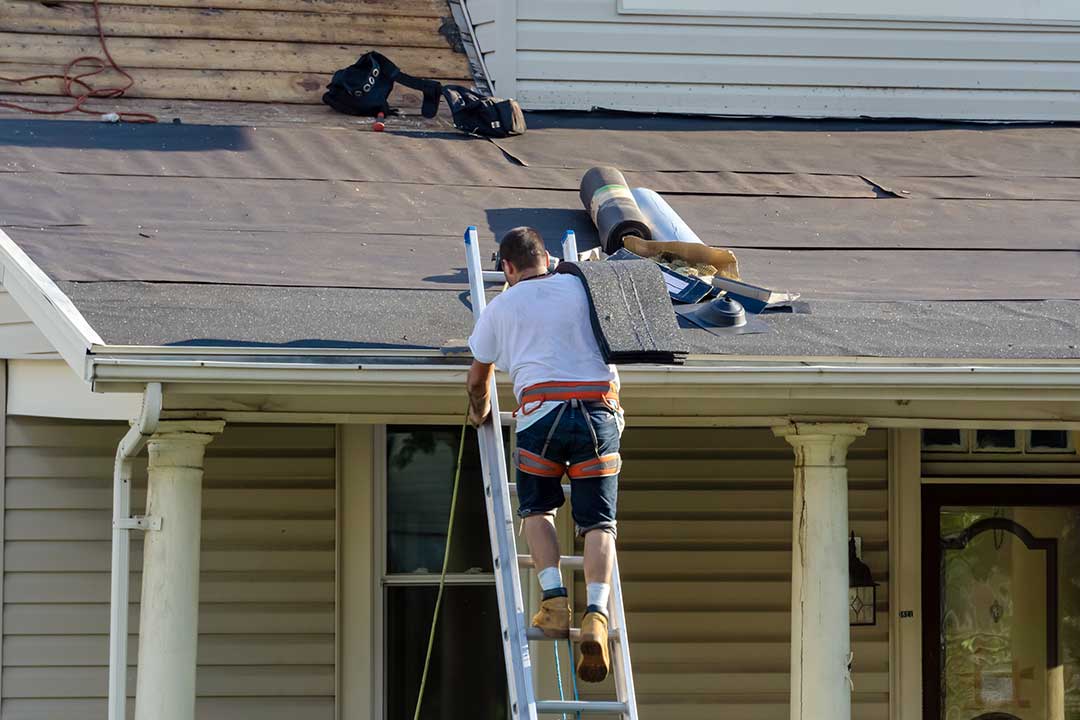
Roofing debris can travel farther than expected, especially when shingles and fasteners fall near roof edges. Cleanup usually includes collecting loose materials from the ground, removing protective coverings, checking landscaping and paved areas, and using magnetic tools to locate stray nails.
A careful visual inspection is still worthwhile after cleanup. Homeowners may want to check driveways, walkways, play areas, gardens, and areas beneath roof edges. Small roofing nails can become hidden in grass, soil, mulch, or gravel.
Gutters may also contain granules and small debris after tear-off. A modest amount can occur during roofing work, but heavily clogged gutters or downspouts may need attention before the next rainfall.
Can residents stay in the house during a tear-off?
Many people remain at home, but the noise and vibration can be disruptive. Anyone working remotely, caring for a baby, recovering from illness, or sensitive to loud sounds may prefer to spend the noisiest portion of the project elsewhere.
Pets can be especially affected by unfamiliar sounds and activity. Dogs may bark, hide, or attempt to escape through open doors or gates. Cats and other animals should be kept indoors and away from exterior work areas.
Windows may be kept closed during removal to reduce dust and noise. Attic access may also be limited while workers are moving materials or inspecting the roof deck.
What are the most common misconceptions?
A roof tear-off is not always limited to removing shingles. Underlayment, flashing, ventilation components, pipe boots, and deteriorated decking may also require attention.
Another misconception is that a new roof automatically covers every existing problem. New materials protect the structure only when the roof deck, water-shedding details, and ventilation are in suitable condition.
It is also risky to assume that visible damage is the only damage. Moisture can travel along roof framing and remain hidden until materials are removed. A thorough inspection during tear-off is often more informative than a ground-level inspection before work begins.
For homes in the area, seasonal timing matters as well. Roofing work planned during a dry, moderate-weather period is generally easier to manage than a project exposed to repeated rain, snow, freezing temperatures, or rapidly changing conditions.
What should be documented during the project?
Homeowners may find it useful to keep a simple record of:
- The number of existing roofing layers
- Areas where decking was damaged
- Flashing or ventilation conditions
- Temporary weather protection used during pauses
- Changes caused by concealed damage
- Final cleanup and areas that were inspected
Photographs of the roof deck before new materials are installed can also provide a useful record of the structure’s condition. Clear documentation helps distinguish expected concealed repairs from unrelated future maintenance concerns.
IMAGE_ALT:
Roof workers remove shingles beside a protected house while exposing the wooden roof deck.
